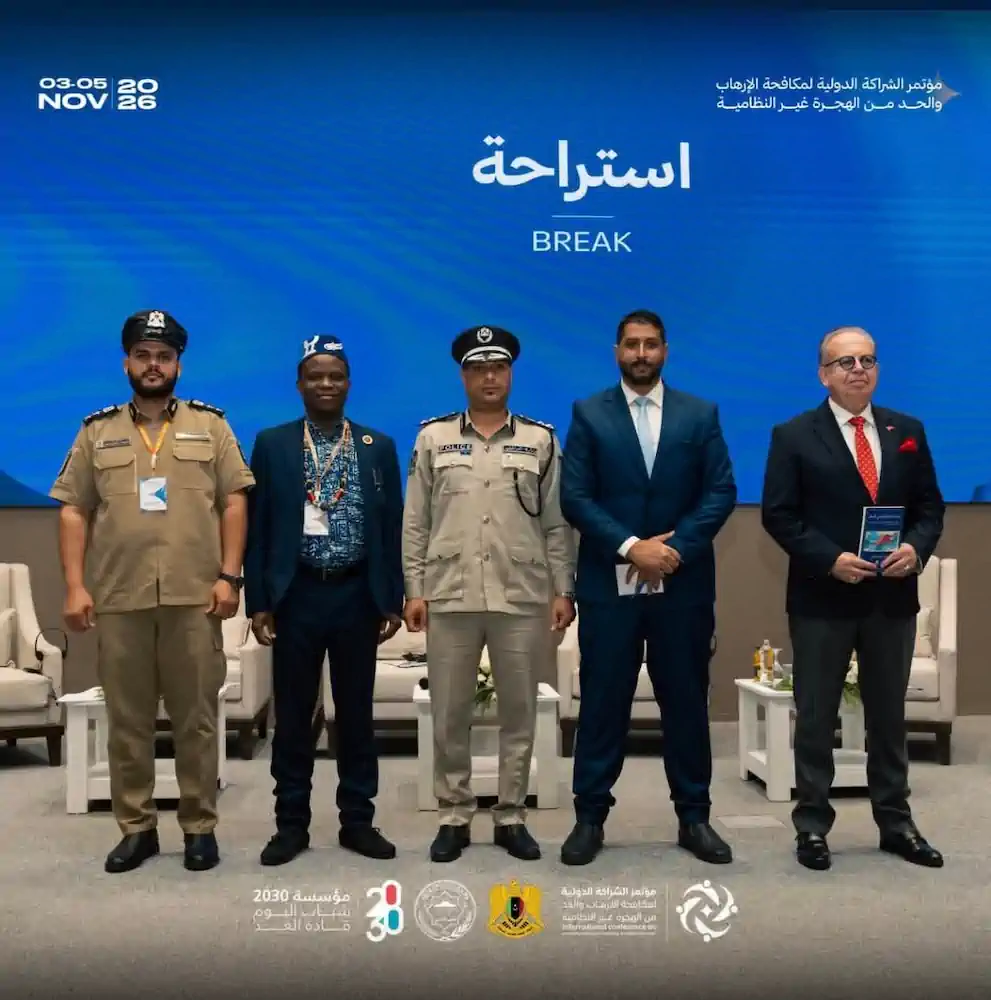
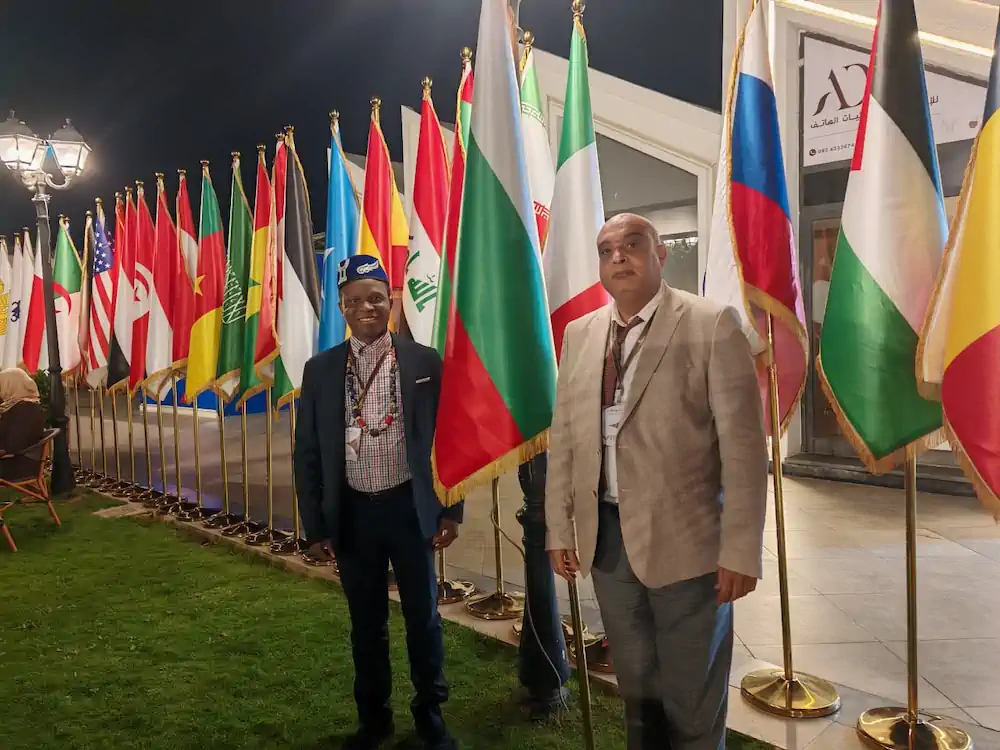
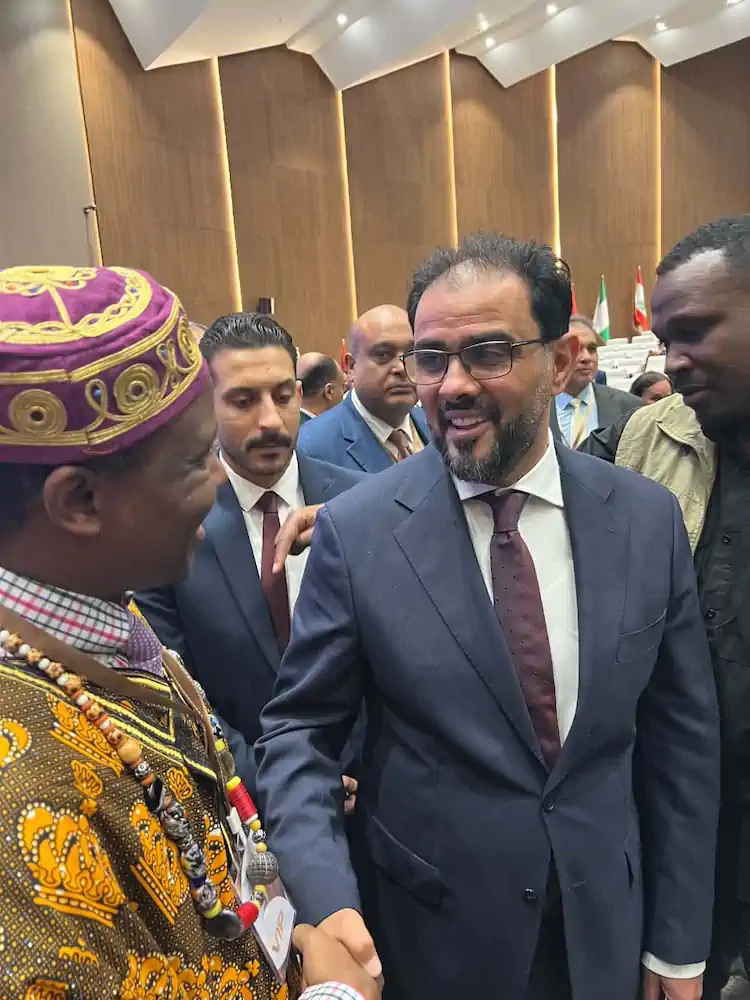
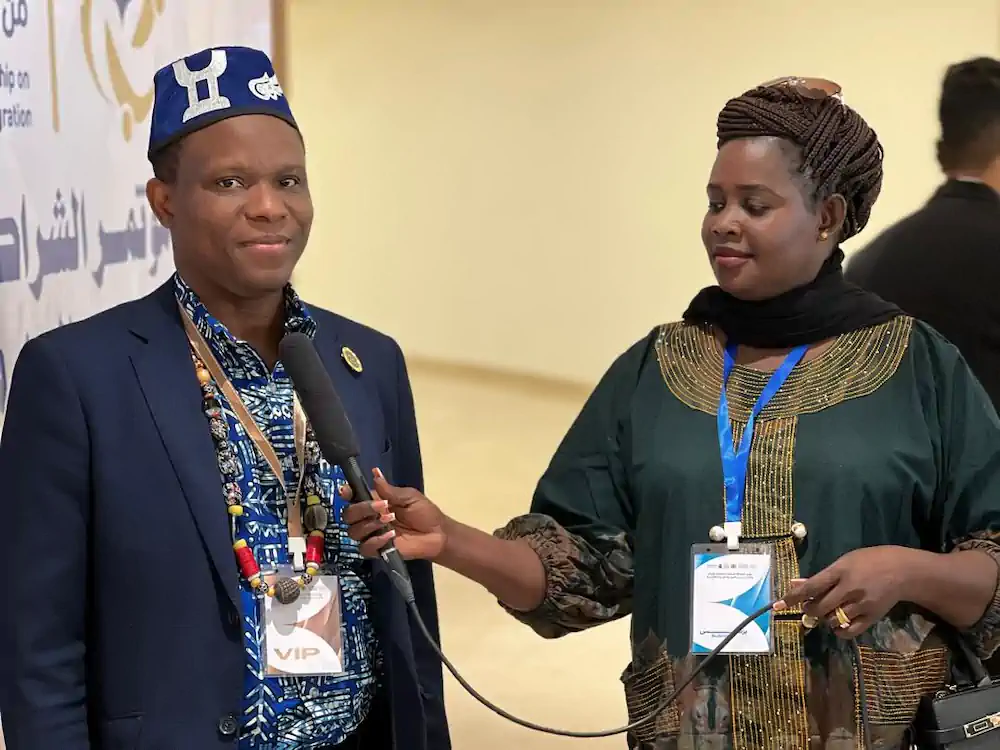
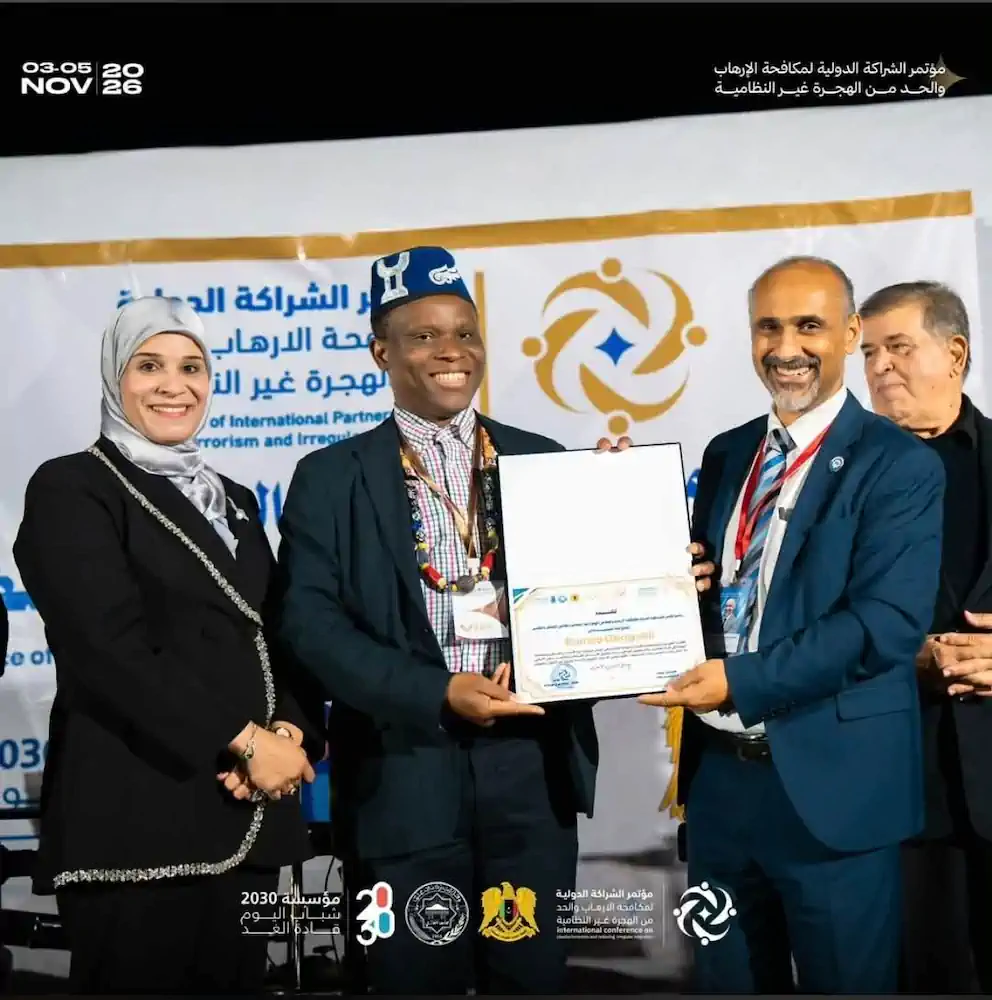
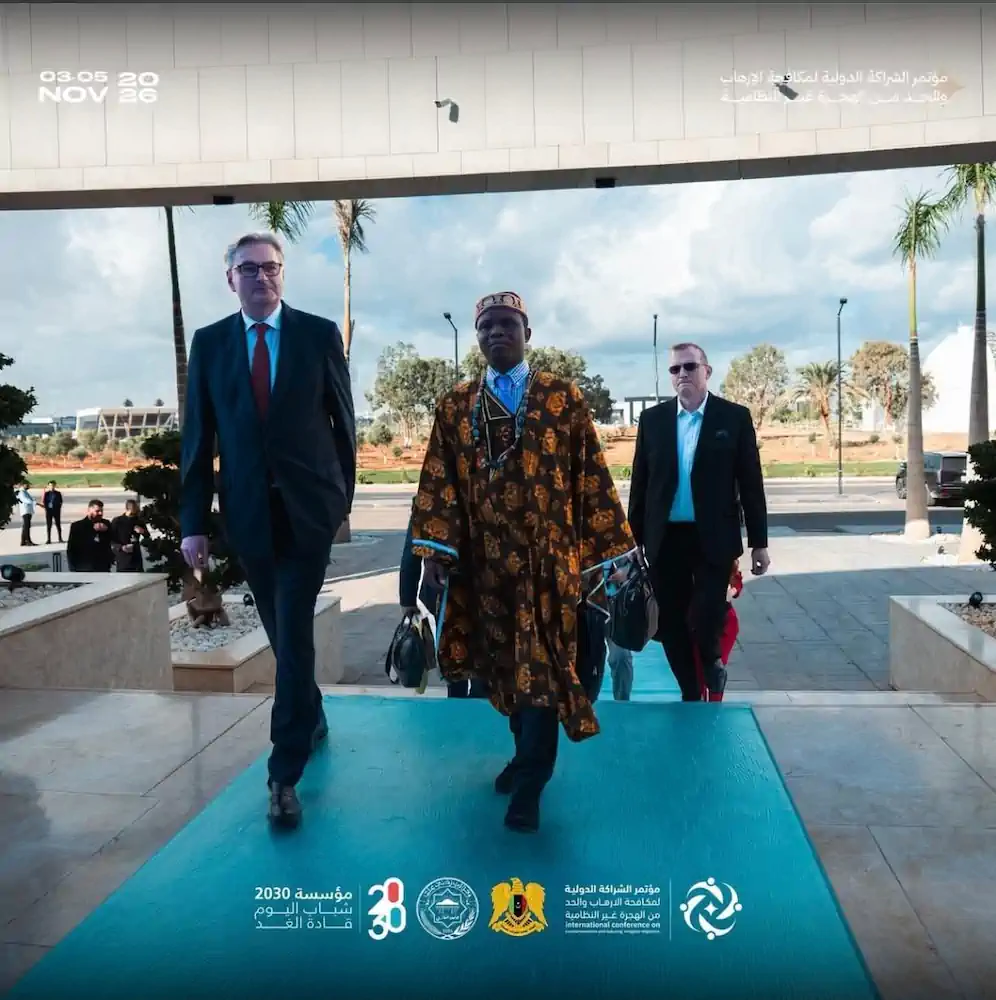
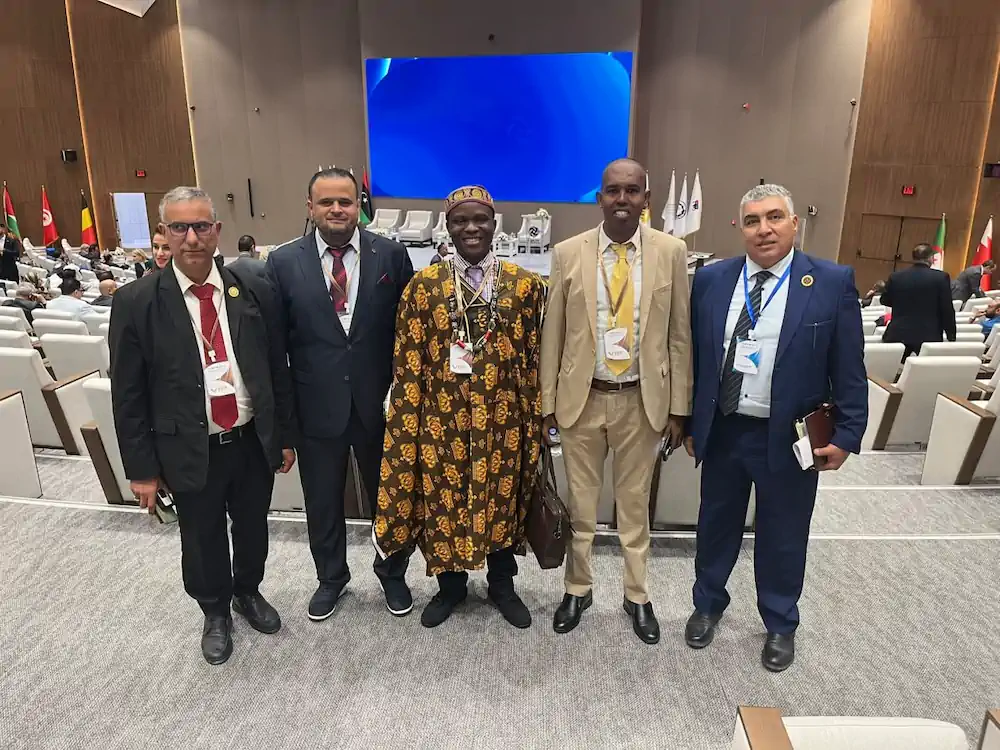
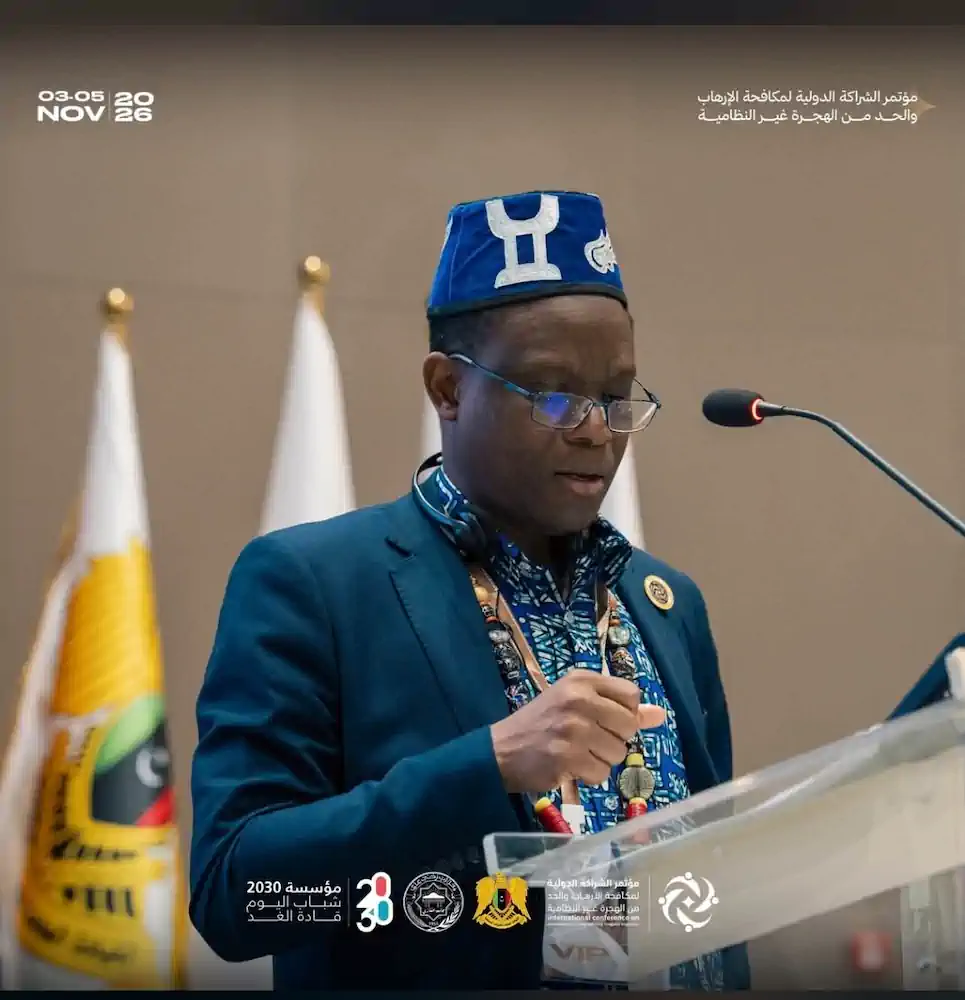
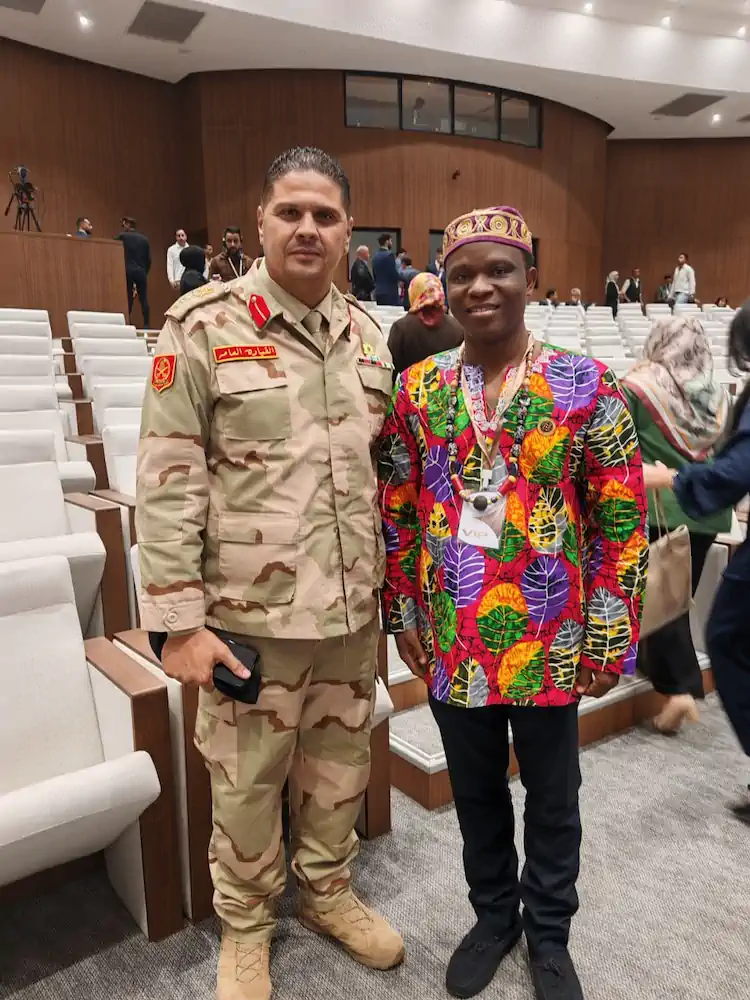
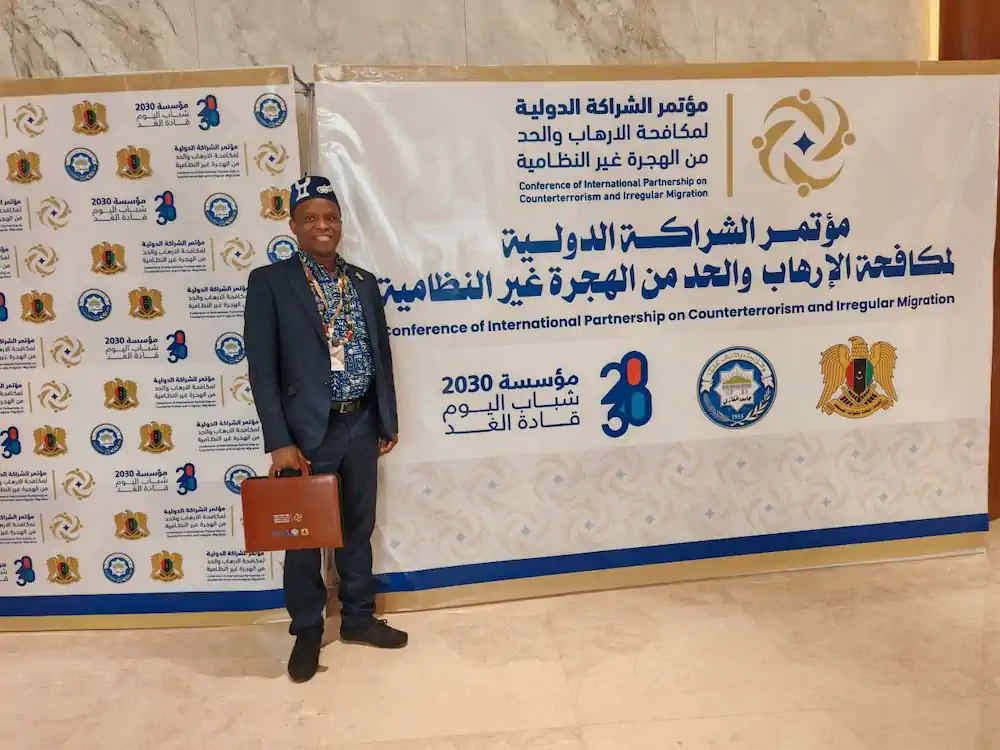
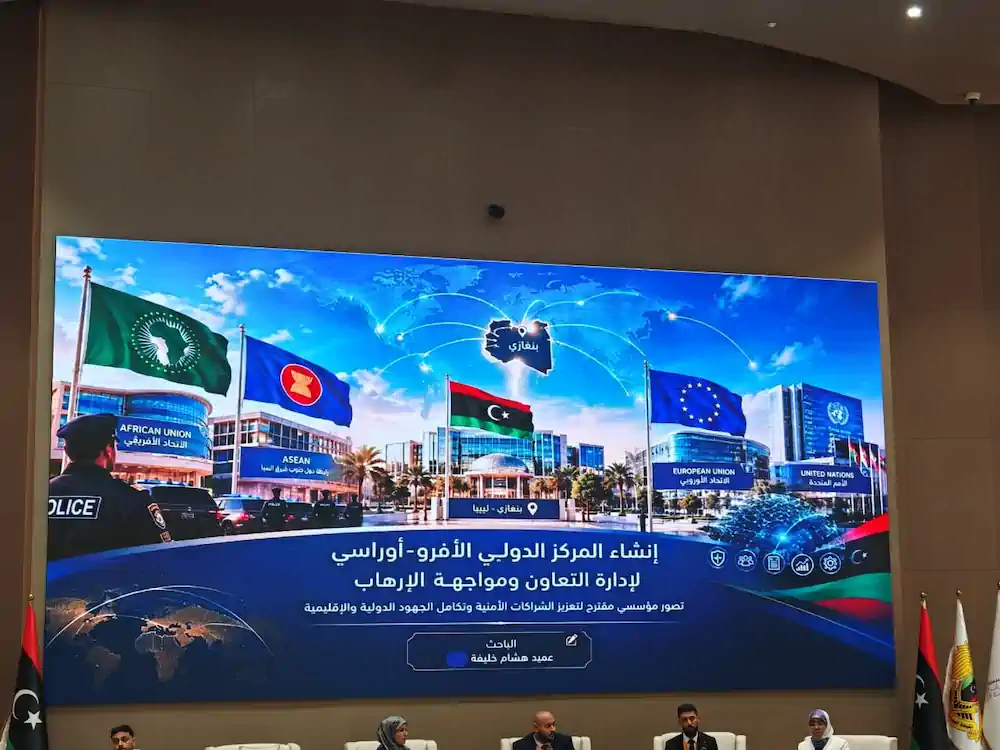
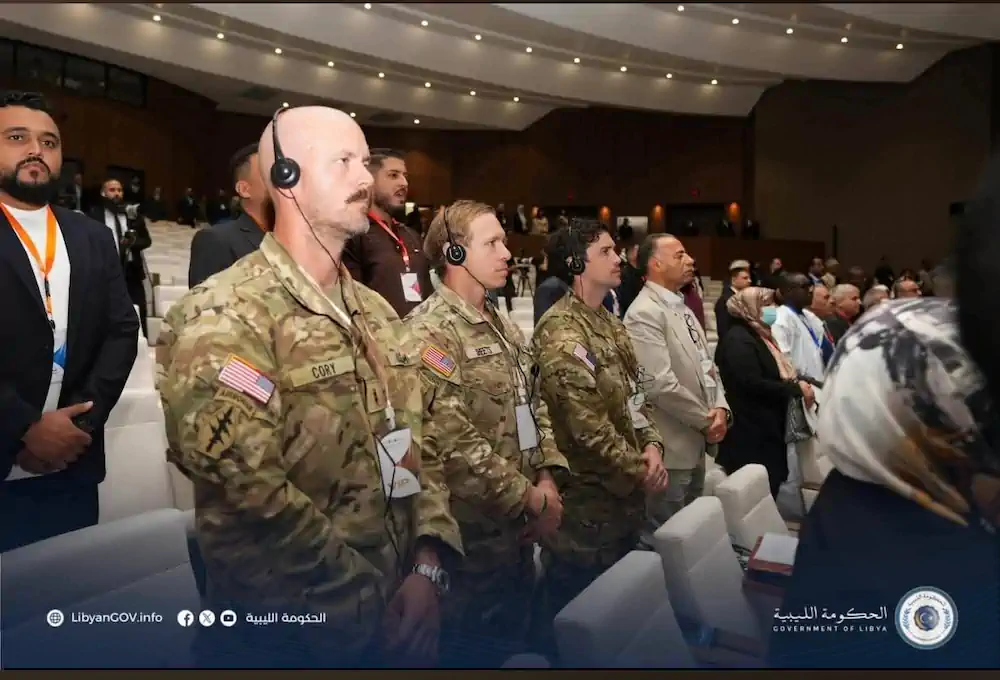
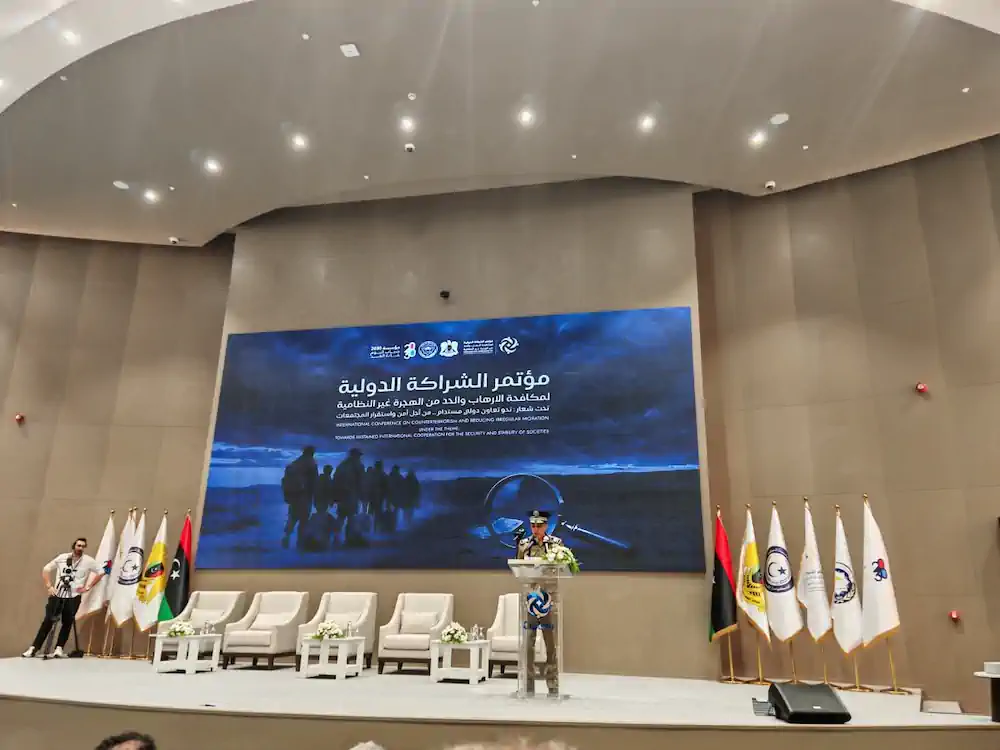
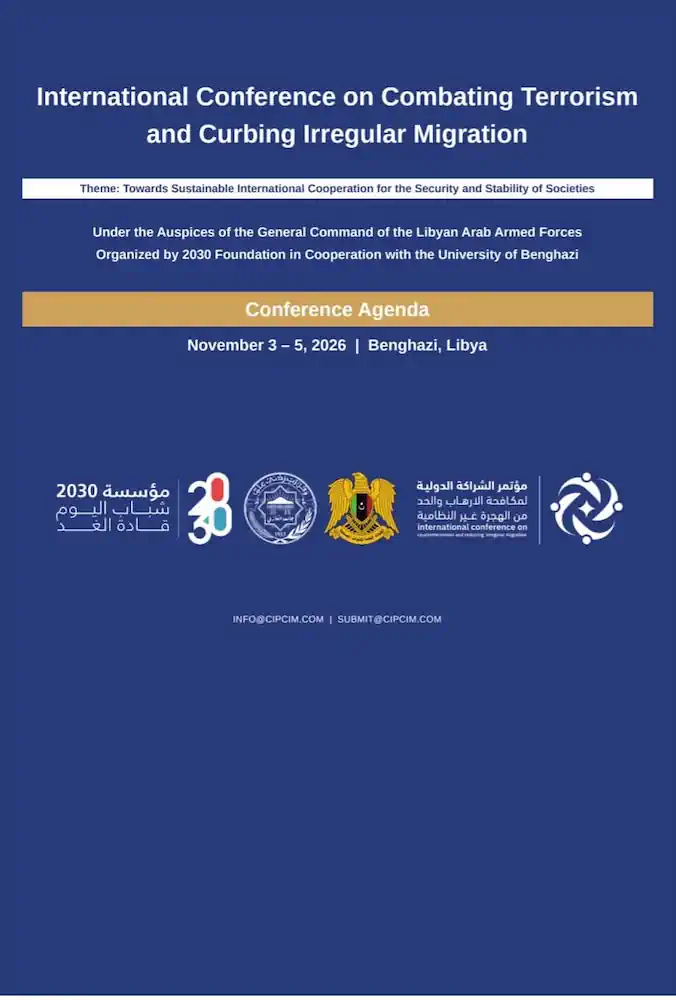
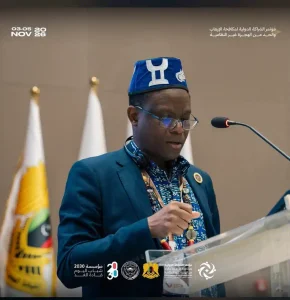
Del 03 al 05 de noviembre de 2026 se celebró en Bengasi (Libia) la Conferencia internacional sobre Contraterrorismo y la lucha contra la migración irregular (CIPCIM 2026). LemAfriQ fue representado por su presidente quien dio una ponencia sobre los “Desafíos de la gestión de migración irregular en el espacio Euromediterráneo”.
Expresamos nuestra gratitud a la Comandancia General de las Fuerzas Armadas Árabes Libias, en particular a su Vice-Comandante en Jefe, el General Saddam Khalifa Haftar y al Coronel Mohammed Faraj Bukhzam, Presidente de la Fundación 2030. Asimismo, no nos olvidamos tampoco de todos los miembros del Comité organizador y del Comité Científico del CIPCIM 2026, presidido por la Dra. Ghada Mustafa; así como a las autoridades de la renovada y moderna Universidad de Bengasi. Les felicitamos por la excelente organización de este encuentro de Alto nivel que reunió a autoridades, delegados y representantes de más de 31 países del mundo.
Esta Conferencia internacional sobre Contraterrorismo y la lucha contra la migración irregular ha sido un marco de alta diplomacia donde se pudo percibir que el compromiso académico sostenido y las alianzas institucionales pueden constituir una base significativa para la cooperación en los ámbitos de la educación superior, la investigación científica, la seguridad nacional, la cultura y las relaciones internacionales.
Compartimos aquí la presentación resumida de dicha investigación.
International Conference on Counter Terrorism and Reducing Irregular Migration
3-5 November 2026 / Benghazi, Libya
Brief presentation of the research work titled:
Challenges of managing irregular migration in the Euro-Mediterranean area
Prof. Dr. Romeo GBAGUIDI, President of LemAfriQ
www.lemafriq.org / Email: rgbaguidi@lemafriq.org
INTRODUCTION
The Euro-Mediterranean area constitutes one of the most complex migration corridors in the world. The confluence of armed conflicts, deep economic inequalities, environmental degradation, and institutional fragility generates mixed flows that challenge existing governance frameworks. This research work analyzes the management challenges posed by irregular migration in this region, focusing on three main pillars: border security, the creation of legal pathways, and international cooperation against the illicit smuggling of migrants and human trafficking. The analysis covers European, North African, and Middle Eastern countries, and is situated in the current context with projections toward 2030.
MIGRATION FLOWS AND CURRENT DATA
Irregular migration is defined as the movement of persons that occurs outside the legal frameworks of the country of origin, transit or destination. In the Mediterranean, this translates mainly into unauthorized maritime crossings carried out in precarious vessels. According to Frontex, in 2023 more than 380,000 irregular crossings were detected at the EU’s external borders, the highest figure since 2016. The Central Mediterranean route concentrated 41% of these detections, followed by the Eastern Mediterranean route and the Western Mediterranean route. Although the actual figure is likely higher due to the lack of systematic recording, the IOM’s Missing Migrants Project documented at least 3,129 deaths in the Mediterranean in 2023, reflecting a serious humanitarian crisis.
It is important to remind that the flows are mixed: they include asylum seekers fleeing persecution, people seeking better economic opportunities and victims of human trafficking.
| Country | Role in the migration route | Main axis of analysis |
| Spain | Destination (EU southern border) | Border control (Ceuta/Melilla fence), agreements with Morocco |
| Italy | Destination (central route) | Search and rescue operations, agreements with Libya and Tunisia |
| Morocco | Origin and transit | Police cooperation and readmission, legal pathways |
| Tunisia | Origin and transit | EU-Tunisia agreement (2023), mixed flow management |
| Turkey | Transit and hosting | EU-Turkey Statement (2016), border externalization |
| Greece | Destination (EU eastern border) | Hotspots, asylum management, pushbacks |
| Libya | Transit and destination | Interdiction at sea, detention conditions |
Table 1: Main characteristics of relevant countries within the Euro-Mediterranean migration system
For this brief presentation of the results of the research work, let us focus on
SEVEN (7) KEY MIGRATION CHALLENGES IN THE EURO-MEDITERRANEAN REGION.
1.- Border Management and Migration Control
Challenge: Balancing effective border control with respect for international humanitarian and legal obligations, such as the principle of non-refoulement.
It is proposed to move towards a co-responsibility model that combines mandatory relocations, financial contributions, and operational support for border states.
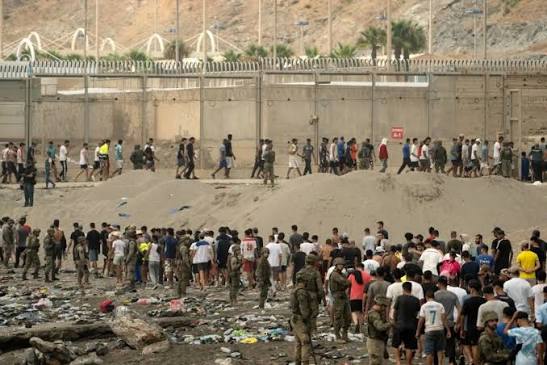
Example: The strengthening of Frontex and the externalization of borders (through agreements with Morocco, Turkey, and Libya) have reduced arrivals along certain routes, but have also shifted the problem elsewhere and led to allegations of human rights violations.
2.- Shared governance and the distribution of responsibilities
Challenge: The pressure falls disproportionately on first-entry countries (Greece, Italy, Malta, Spain) due to the lack of a robust mechanism for solidarity and burden-sharing within the EU.
Example: The EU Pact on Migration and Asylum (2024) attempts to address this imbalance, but its implementation remains uncertain.
3.- International cooperation and dependence on third countries
Challenge: Cooperation with countries of origin and transit (Morocco, Tunisia, Turkey, Libya) is essential yet complex, as these nations may use migration as a tool for political leverage and exhibit serious human rights shortcomings.
Example: The 2016 EU-Turkey agreement and the 2023 EU-Tunisia memorandum have been used by the partner countries to secure political or economic concessions.
| Cooperation Framework | Partner Country | Primary Political Hurdle | Recent Example |
| EU-Turkey Statement (2016) | Turkey | Leverage over visa liberalization and accession talks | 2020 « opening of gates » crisis |
| EU-Morocco Partnership | Morocco | Western Sahara dispute; migration as a political tool | 2021 Ceuta border incident |
| EU-Tunisia MoU (2023) | Tunisia | President Saied’s anti-migrant rhetoric; economic fragility | 2023 IOM report on abuses against sub-Saharan migrants |
| EU-Libya Cooperation | Libya (GNA/LNA) | Lack of unified government; militia control of detention | 2023 UN report on arbitrary detention and torture |
Table 2: Cooperation framework and political hurdle in the Mediterranean migration management
4.- Combating migrant smuggling and human trafficking
Challenge: Smuggling and trafficking networks exploit the lack of safe and legal pathways, putting migrants’ lives at risk and making it difficult to distinguish between smuggling (consensual) and trafficking (coercive).
Example: The criminalization of rescue NGOs and the lack of legal alternatives have been criticized by human rights organizations.
5.- Structural causes of migration
Challenge: Factors such as political instability, climate change, and economic inequalities in Africa and the Middle East drive migration flows.
Example: Development cooperation initiatives have yielded limited results; a long-term investment strategy is required to generate employment and local resilience.
6.- Integration into host societies
Challenge: Irregular migration gives rise to an informal economy and social exclusion. Effective integration requires access to housing, education, and healthcare, as well as campaigns against xenophobia.
Example: Spain has implemented regularization processes based on employment or social ties (“arraigo social/laboral”), facilitating integration and reducing the vulnerability of migrants.
7.- Operational and logistical challenges
Challenge: Coordination in search and rescue operations, the management of returns, and the transfer of surveillance technology present technical and administrative difficulties.
Example: A lack of administrative capacity in partner countries and the fragmentation of protocols hinder the effectiveness of readmission agreements and joint operations.
STRATEGIC RECOMMENDATIONS
The Euro-Mediterranean region anticipates continued movement over the next five years.
No single policy instrument can manage irregular migration. The most effective strategies combine border management, development aid, legal pathways, and diplomatic engagement.
- Strengthen bilateral agreements with clear protocols for the division of responsibilities and protection.
- Invest in regional capacities, improve legal pathways, and bolster the protection of vulnerable individuals.
- Enhance data sharing and joint operations, using sustainable and multidimensional approaches. Example of the Libia and Chad recent cooperation
- Investing in resilient institutions and cooperation is key to humanitarian management.
- Promoting comprehensive and sustainable approaches
| Recommendation | Primary actors | Expected outcome (2026–2030) |
| Strengthen bilateral and regional agreements | EU, Spain, Italy, Greece, Morocco, Turkey | Shared burden, clear protocols, reduced diplomatic friction |
| Invest in capacity building and development | EU institutions, member states, partner countries | Improved coast guard and asylum capacity, sustainable development |
| Enhance legal pathways and protection | National governments, EU, UNHCR | Reduced irregular crossings, better protection outcomes |
| Improve data sharing and joint operations | Frontex, national authorities, third countries | Faster risk analysis, effective anti-smuggling operations |
| Promote comprehensive approaches | All stakeholders | Resilient, balanced migration governance |
Table 3: Sustainable approaches for expected outcome
CONCLUSION
Managing irregular migration in the Euro-Mediterranean region is a multidimensional challenge that requires coordinated, sustainable, and human rights-compliant approaches. Key challenges include shared governance, international cooperation, combating human smuggling and trafficking, addressing root causes, and fostering social integration – all within a context of political and operational tensions. Solutions must combine border security, legal pathways, development cooperation, and mechanisms for solidarity among countries.